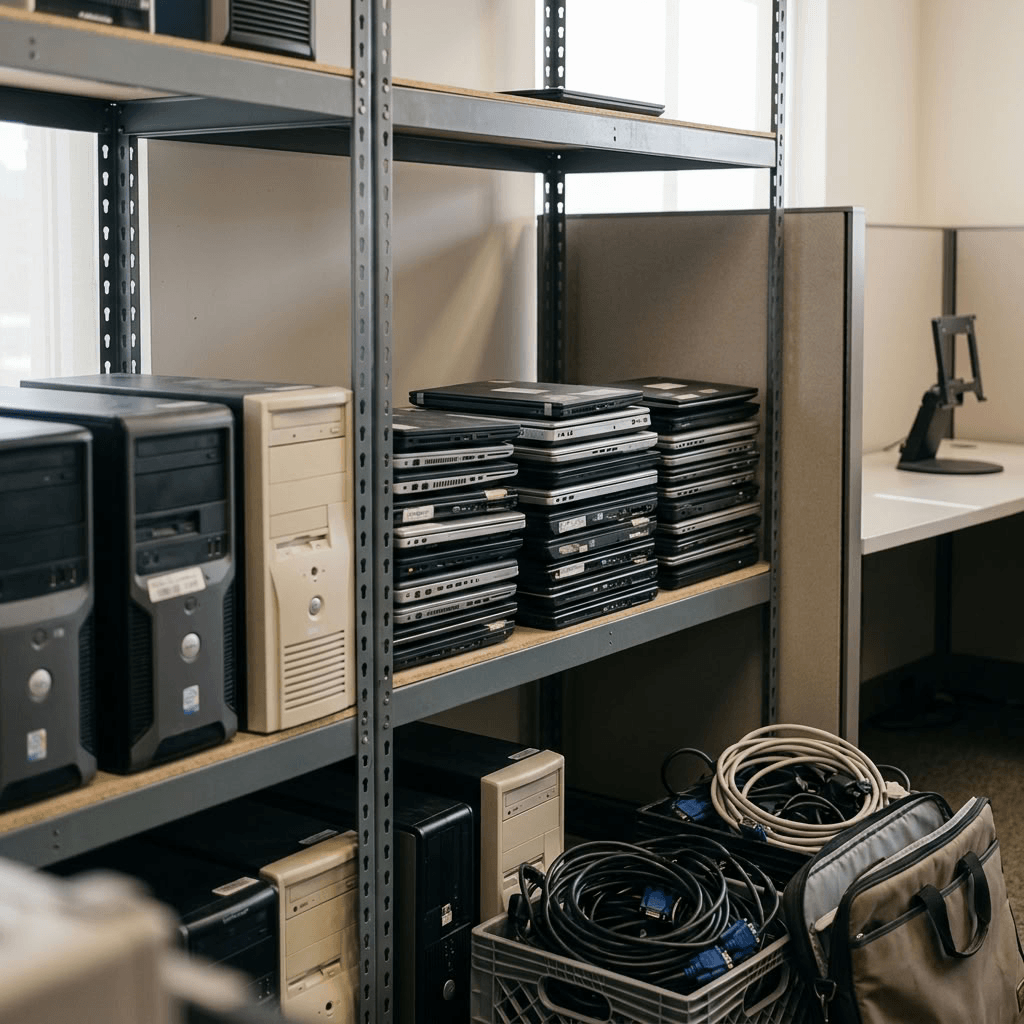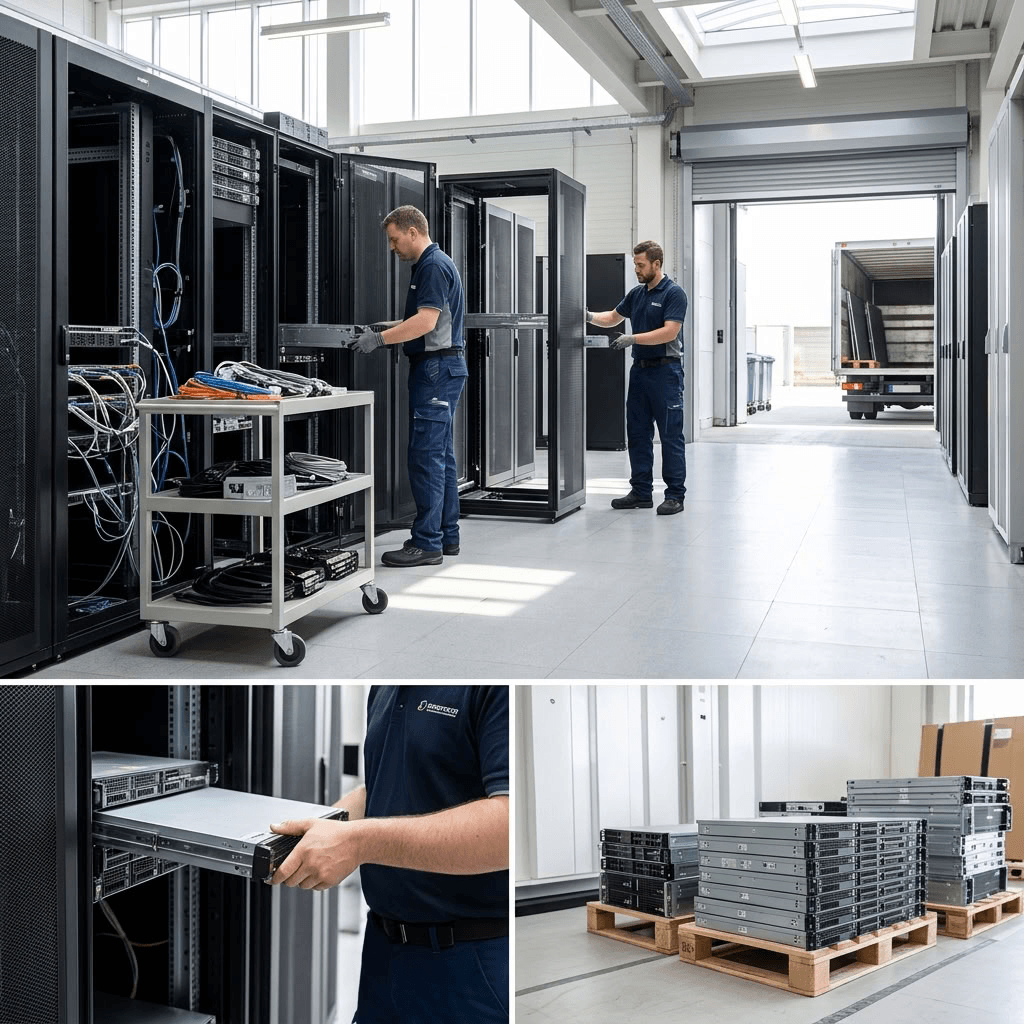
Data center decommissioning is a critical part of IT infrastructure management. Whether an organization is migrating to the cloud, consolidating facilities, upgrading hardware, or closing a data center, retiring infrastructure requires careful planning to protect sensitive information, maintain compliance, and recover value from retired equipment.
For organizations managing large volumes of enterprise IT equipment, working with an experienced ITAD provider helps reduce operational risks, protect data, and streamline the transition. This guide outlines the data center decommissioning process, why a structured process matters, and common reasons organizations decommission data centers.
What is data center decommissioning?
Data center decommissioning is the process of safely retiring and removing IT infrastructure that is no longer needed. It may be required when an organization migrates to the cloud, upgrades hardware, consolidates facilities, relocates operations, or shuts down a data center.
The process involves more than disconnecting servers and removing equipment. It includes planning, asset inventory, secure data erasure or destruction, equipment removal, IT asset disposition (ITAD), responsible electronics recycling, and project documentation.
Data center decommissioning process: 6 key steps
Every project has different requirements, here are six key steps to provide a practical framework for decommissioning data center infrastructure securely and efficiently.
Step 1: Planning and asset assessment
The first step in the data decommissioning process is to establish the scope, requirements, and timeline for the decommissioning project. An initial assessment should identify the equipment being retired, the systems it supports, applicable data security requirements, and any facility or contractual obligations.
Key activities include:
- Creating an inventory of servers, storage arrays, network devices, and supporting infrastructure.
- Identifying equipment containing sensitive or regulated data.
- Mapping dependencies and confirming migration or shutdown readiness.
- Establishing project timelines, responsibilities, and removal procedures.
- Defining data destruction, transportation, and recycling requirements.
Accurate inventory records help teams account for every asset throughout the project and reduce the risk of equipment being overlooked.
Step 2: Secure data erasure and hard drive destruction
Data security is one of the most important stages of the data center decommissioning process. Retired equipment must be handled according to the organization’s data destruction policy and applicable requirements before it is reused, resold, recycled, or disposed of.
Data destruction methods:
- Data erasure: Sanitizing eligible storage devices using appropriate tools and verified procedures.
- Hard drive destruction: Shredding hard drives, SSDs, and other storage media when destruction is required or secure erasure is unsuitable.
Equipment eligible for remarketing can undergo data erasure, while assets that cannot be remarketed can have their data-bearing media physically destroyed. Establishing these requirements early helps ensure that sensitive information remains protected throughout equipment handling and transportation.
Learn more: What’s the Difference Between Hard Drive Destruction, Hard Drive Erasure, and Data Deletion
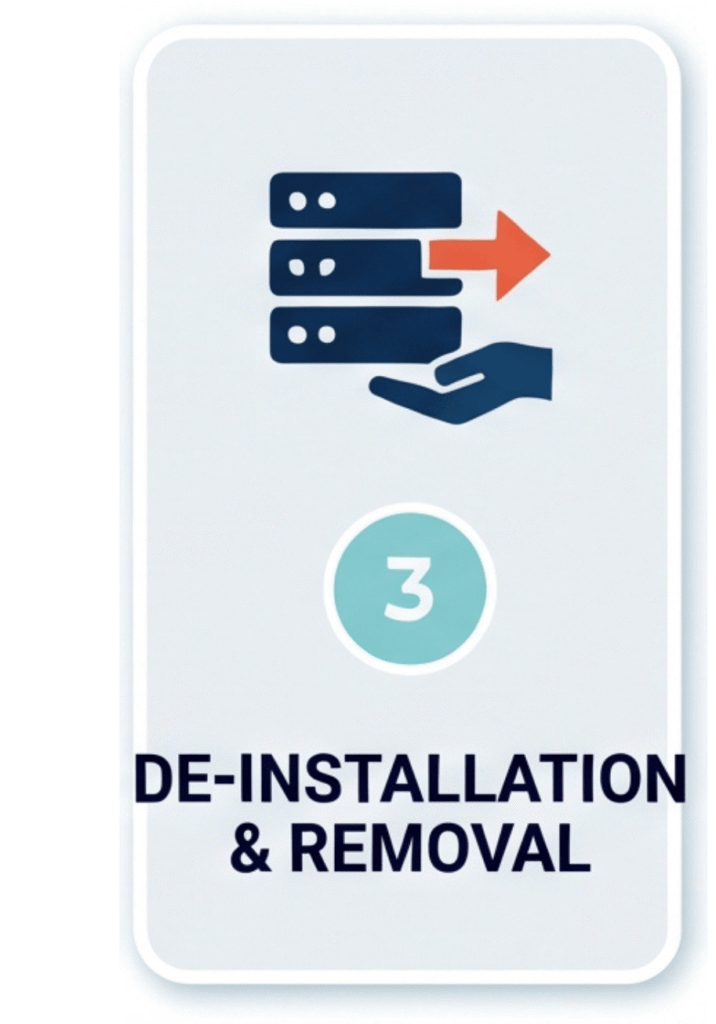
Step 3: Equipment de-installation and removal
Once systems are approved for retirement and the necessary data security procedures are established, equipment can be disconnected and removed according to the project plan.
Depending on the scope, this stage may involve:
- De-installing rack-mounted, blade, and tower servers.
- Removing storage arrays, network switches, routers, and firewalls.
- Disconnecting power distribution units (PDUs) and other supporting equipment.
- Removing designated cables, transceivers, and connectivity accessories.
- Coordinating the removal of racks, cabinets, and other infrastructure included in the project.
Equipment must be identified and tracked during removal to maintain accurate asset records and support chain of custody requirements. For large-scale projects, coordinated equipment handling and transportation are particularly important. A documented process helps maintain accountability as assets move from the data center to a secure processing facility.
Learn more: IT Hardware Recycling: 5 Signs Your IT Assets Are Outdated and Ready for Hardware Recycling
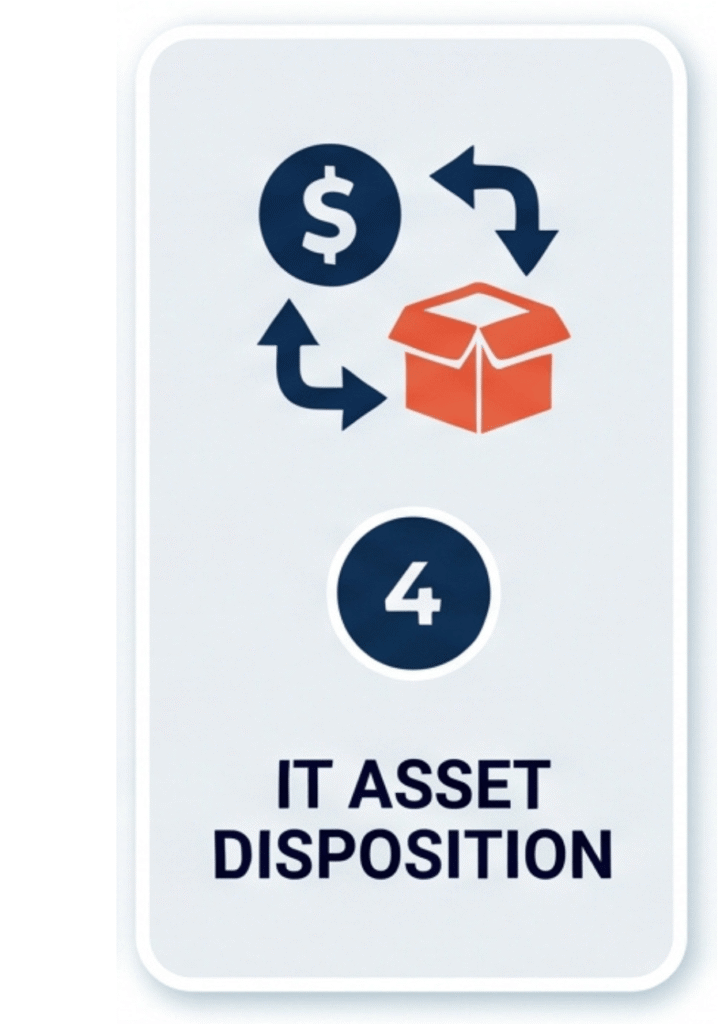
Step 4: IT asset disposition and value recovery
After removal, equipment should be evaluated to determine the most appropriate disposition route. Depending on condition, functionality, market demand, and data security requirements, equipment may be:
- Resold: Functional assets with market value may be remarketed to recover a portion of the original investment.
- Refurbished or reused: Suitable equipment may be prepared for another operational use.
- Recycled: Equipment without viable reuse or resale potential can be directed to appropriate electronics recycling channels.
- Destroyed: Assets requiring physical destruction can be processed according to the applicable security requirements.
Learn more: IT Asset Remarketing: 5 Reasons Why Your Business Should Consider Remarketing IT Assets
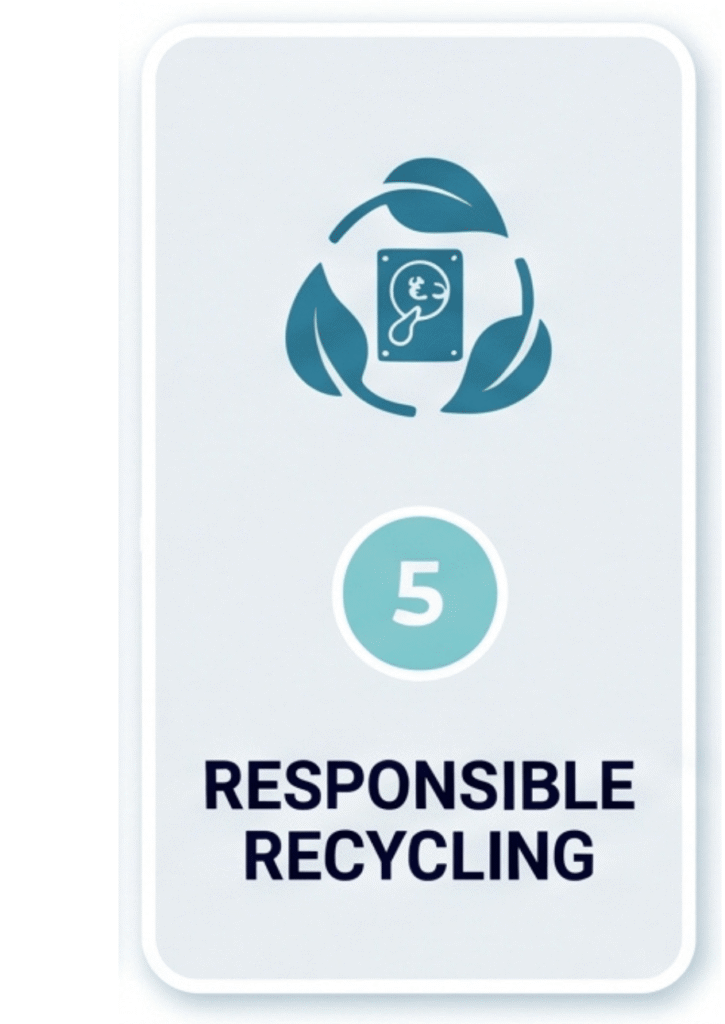
Step 5: Responsible electronics recycling
Equipment that cannot be reused or remarketed should be handled through appropriate recycling and disposal channels. Organizations should work with certified e-waste recycling providers and evaluate relevant environmental certifications, processing practices, and documentation requirements.
Responsible recycling helps recover usable materials, reduce landfill waste, and provide greater visibility into how retired equipment is processed.
Learn more: Why E-Waste Recycling is Important
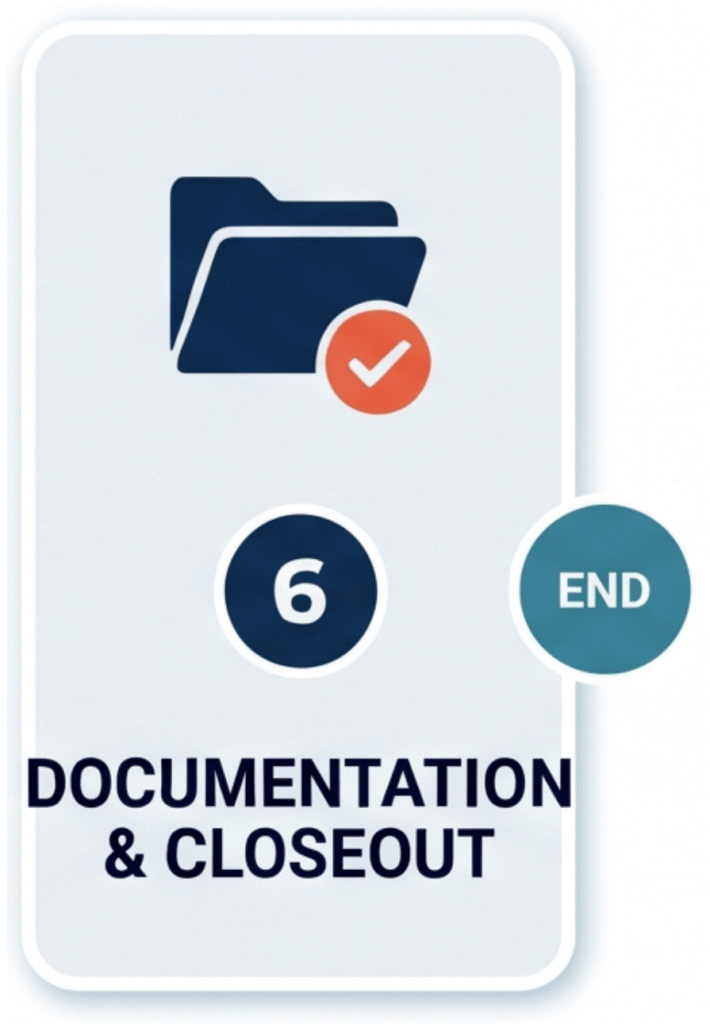
Step 6: Documentation, reporting, and project closeout
The final step is confirming that assets have been accounted for and all required activities have been documented.
Depending on the project, closeout documentation may include:
- Final asset inventories and disposition records.
- Certificates of data destruction.
- Chain of custody documentation.
- Equipment reuse, resale, and recycling records.
- Project completion reports and supporting compliance documentation.
Maintaining these records helps organizations establish an audit trail, verify the disposition of retired assets, and demonstrate that data security and handling requirements were addressed.
Learn more: Importance of a Secure Chain of Custody Process for End-of-Life Data Destruction
Why is a structured data center decommissioning process important?
A poorly managed decommissioning project can expose organizations to data breaches, regulatory penalties, unnecessary costs, and operational disruption. A structured approach helps address these risks before equipment leaves the facility.
Data security: Protects sensitive information through verified data erasure or physical hard drive destruction before equipment leaves the facility.
Regulatory compliance: Generates full documentation for sanitization, transport, and destruction to satisfy standards like HIPAA, GDPR, and PCI DSS.
Operational continuity: Prevents unexpected downtime through strategic planning, thorough asset tracking, and precise coordination with IT teams.
Value recovery: Recoups capital investments by reselling or redeploying functional equipment that meets security and market standards.
Environmental responsibility: Minimizes electronic waste through refurbishment, reuse, and certified recycling with qualified ITAD partners.
Learn more: How to Choose a Certified ITAD Provider for Secure Data Destruction
Why do organizations decommission data centers?
Organizations may initiate a data center decommissioning project or a data center refresh plan for several reasons:
- Cloud migration: Moving workloads and applications to cloud infrastructure.
- Hardware refreshes: Replacing aging equipment with newer technology.
- Facility consolidation: Combining multiple data centers to improve efficiency and reduce operating costs.
- Business/ office technology relocation: Moving IT infrastructure to another office, facility, or region.
- Lease expiration: Removing equipment and preparing a leased facility for handover.
- Infrastructure modernization: Redesigning IT environments to meet changing performance, security, or capacity requirements.
- Facility closure: Retiring an entire data center when its infrastructure is no longer needed.
Learn more: When Should You Consider a Data Center Hard Drive Refresh?
How Keystone can support your data center decommissioning project
Keystone Technology Management helps organizations manage data center decommissioning with secure data destruction, IT asset disposition (ITAD), asset recovery, and responsible electronics recycling.
Whether you’re planning a hardware refresh, consolidating facilities, or decommissioning an entire data center, our team can streamline IT asset disposal and identify opportunities to recover value from eligible equipment. Contact Keystone Technology Management to discuss your next data center decommissioning project.
Learn more:
IT Asset Lifecycle Management Best Practices: A Complete Guide for Businesses and Organizations
Risks of Improper IT Asset Disposal: Why Secure Data Destruction Matters
3 Reasons Why Hard Drive Destruction is Beneficial to Your Business
Explore more:
Hard drive destruction
Data erasure
IT asset value recovery
E-waste recycling