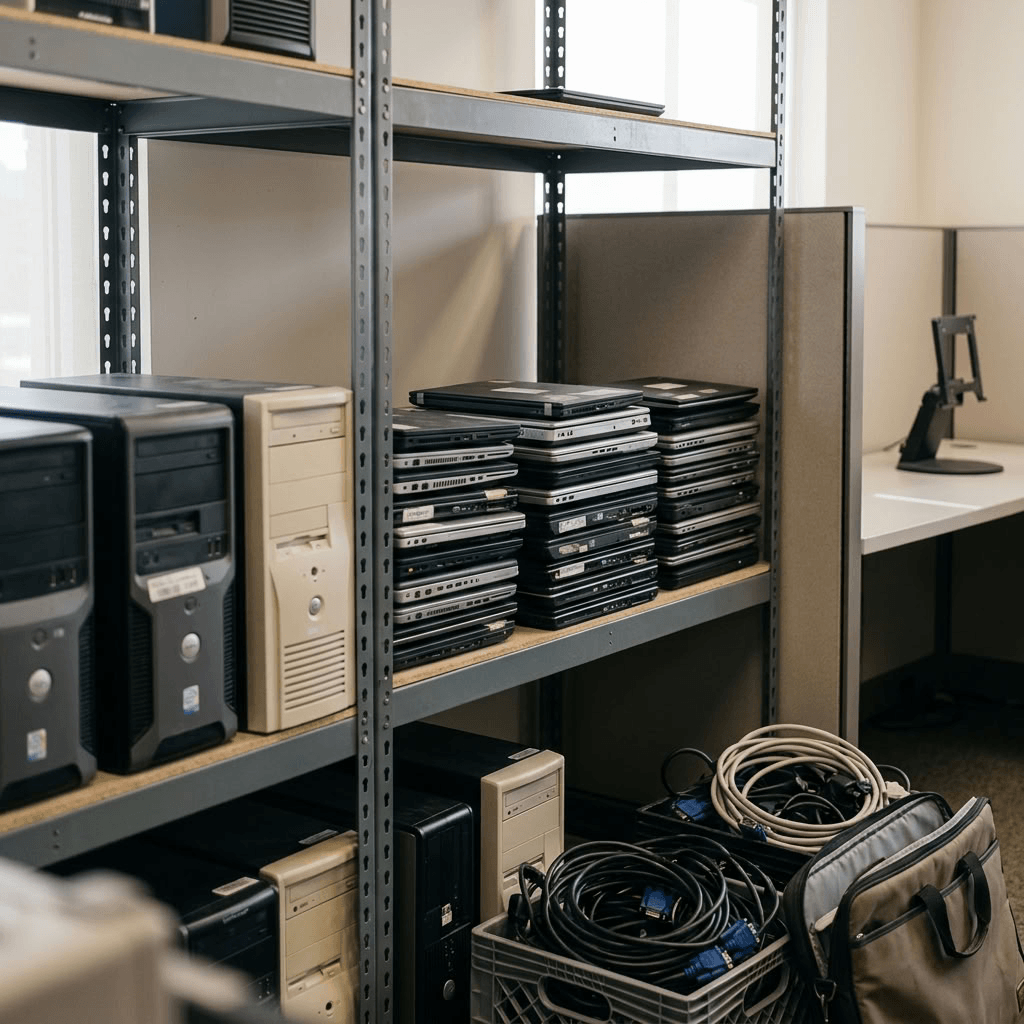
When it’s time to decommission your IT equipment, securely removing the data stored on those devices should be one of your highest priorities. Simply retiring a computer, server, or hard drive without properly sanitizing it can leave sensitive business information vulnerable to unauthorized access, even if the files appear to have been deleted. Understanding the difference between hard drive destruction, hard drive erasure, and data deletion is essential for protecting your organization, maintaining regulatory compliance, and preventing costly data breaches.
The three most common methods of data destruction are hard drive destruction, hard drive erasure, and data deletion. While they may sound similar, each provides a different level of security and serves a different purpose. In this guide, we’ll explain how each data destruction method works, compare their advantages and limitations, and help you determine which option is best for your organization’s retired IT assets.
What are the different methods of data destruction?
There are three different methods of data destruction to remove data from a storage device:
- Hard drive destruction or hard drive shredding
- Hard drive erasure or data wiping
- Data deletion
While all three involve removing information from a drive, they provide very different levels of security. Understanding the differences will help you choose the right method for your retired IT assets.
Hard drive destruction vs. hard drive erasure vs. data deletion: A quick comparison
| Method | Security Level | Drive Reusable? | Data Recoverable? | Best For |
|---|---|---|---|---|
| Data deletion | Low | Yes | Often recoverable | Everyday file management only |
| Hard drive erasure | High | Yes | No (when professionally performed) | Devices that will be reused or resold |
| Hard drive destruction | Highest | No | No | Highly sensitive data or failed/retired drives |
What is hard drive destruction?
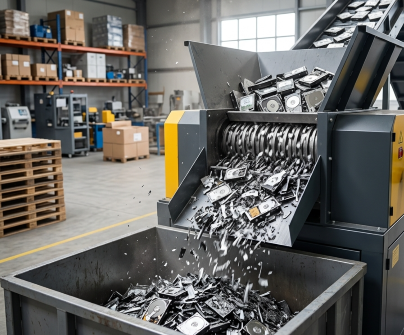
Hard drive destruction, or hard drive shredding, is the physical destruction of the storage media so that the data can never be accessed again. Industrial shredders, crushers, or disintegrators break hard drives into small pieces with small rotating teeth, permanently destroying the platters or memory chips that store the data. Once the drive has been destroyed, recovering the information is virtually impossible.
Hard drive destruction is considered one of the most economical and secure forms of data destruction and is commonly used by organizations such as banks, law firms, hospitals, insurance companies, offices, government agencies, schools, and other organizations who carry sensitive information.
The benefits of hard drive shredding include:
- Permanent, irreversible data destruction
- Eliminates any possibility of future data recovery
- Fast and efficient for processing large quantities of drives
- Meets strict security and compliance requirements
- Ideal for failed or damaged drives that cannot be erased
Because the drive is physically destroyed, it cannot be reused or resold. Any remaining asset value is lost, although components may still be recycled responsibly through certified electronics recycling programs. Learn more about hard drive destruction.
Learn more: Why Your Business Should Consider a Data Destruction Service
What is hard drive erasure?
Hard drive erasure, also known as data wiping or data sanitization, uses specialized software to overwrite every sector of a storage device with new data. Rather than destroying the hardware, the original information is replaced with meaningless binary data. When performed using certified data erasure software that meets recognized industry standards, the original information cannot be recovered. Unlike simply deleting files, data erasure verifies that every accessible portion of the drive has been sanitized.
The benefits of hard drive erasure include:
- Permanently removes data while preserving the hardware
- Allows drives to be reused, redeployed, or resold
- Helps maximize the resale value of retired IT assets
- Supports sustainability by extending hardware life
- Generates detailed audit reports and certificates of erasure
Data erasure takes considerably longer than physical destruction because every storage sector must be overwritten and verified. The process also requires specialized software, trained technicians, and drives that remain fully functional. If a hard drive is damaged or no longer operates properly, secure erasure may not be possible, making physical destruction the preferred option.
Learn more about asset value recovery and IT asset refurbishment.
Read more: What is the Role of Data Destruction in Cybersecurity?
What is data deletion?
Data deletion is what most people do every day, moving files to the recycle bin, emptying the trash, deleting folders, or even formatting a drive. This means deleted files can frequently be recovered using commercially available recovery software, even after a drive has been formatted. For businesses storing confidential customer information, financial records, intellectual property, or employee data, relying on standard deletion creates significant security risks.
Why data deletion isn’t enough
Deleting files may make them disappear from view, but it does not securely destroy the underlying data. Simply deleting data can leave organizations vulnerable to:
- Data breaches
- Identity theft
- Compliance violations
- Regulatory penalties
- Unauthorized access to confidential information
Data deletion should never be considered a secure data destruction method for retired business devices. Learn more about secure IT asset disposal.
Learn more: The Dangers of Not Destroying Your Company’s Data
Which data destruction method should you choose for your business?
The right data destruction method depends on what your organization plans to do with its retired IT assets, the sensitivity of the information they contain, and any regulatory or compliance requirements you must meet.
Consider the condition of your equipment, whether you want to recover value from your assets, and the level of risk your organization is willing to accept. The following guidelines can help you determine which data destruction method best aligns with your security, operational, and sustainability goals.
Choose hard drive destruction if:
- Your business contains highly confidential such as business information, financial records, customer data, healthcare records, and other sensitive information.
- The hardware has reached the end of life and needs to be retired or recycled.
- The drive is damaged or no longer functions.
- Maximum security is your highest priority.
Choose hard drive erasure if:
- You want to securely remove data while preserving the hardware.
- You want to resell or reuse the hardware.
- You want to recover value from retired IT assets.
- The storage device is still fully operational.
Avoid relying on data deletion
Deleting files or formatting a hard drive should never be used as your organization’s data destruction strategy. While it may seem convenient, it does not permanently remove sensitive information and leaves your business exposed to unnecessary risk.
Learn more: How to Build a Data Destruction Policy That Protects Your Organization
Why work with a certified data destruction provider?
Whether you choose hard drive destruction or certified hard drive erasure, the process should always be performed by trained and certified ITAD providers using documented procedures.
A certified IT asset disposition (ITAD) provider helps ensure:
- Secure chain of custody throughout the process
- Certified data destruction or erasure procedures
- Compliance with industry regulations
- Detailed reporting and Certificates of Destruction
- Responsible e-waste recycling of retired electronics
Certified data destruction protects your business while giving you confidence that sensitive information has been permanently removed. Learn more about data destruction services
Secure your retired IT assets with Keystone Technology Management
At Keystone Technology Management, we provide both certified hard drive destruction and hard drive erasure services to help organizations securely retire their IT equipment. Whether your priority is maximizing asset value through certified data erasure or permanently eliminating sensitive information through physical destruction, our experienced team can recommend the best solution for your business while maintaining a secure chain of custody from pickup to final processing.
Contact Keystone Technology Management today to learn which data destruction method is right for your organization and ensure your retired IT assets are safely and securely handled.