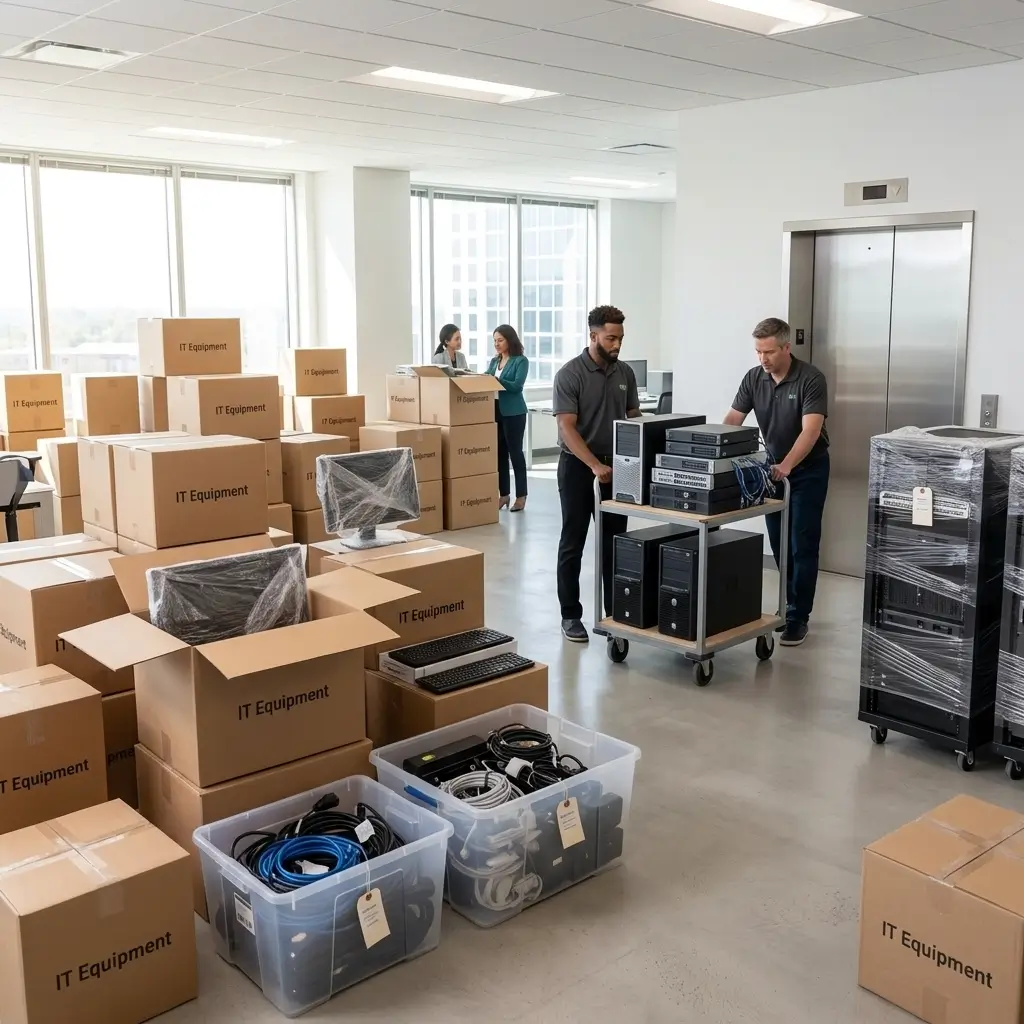
Moving to a new office involves more than packing desks and furniture. Your technology infrastructure needs to be carefully planned, transported, installed, and tested to ensure your business can get back to work with minimal disruption.
A well-planned office technology relocation can help prevent unexpected downtime, protect sensitive data, and ensure your IT equipment is ready to go when employees arrive at the new location. From reviewing your existing hardware to preparing the new office for your technology needs, here are four important to-dos to keep in mind when relocating your office technology.
1. Plan your office technology relocation ahead of time
The earlier you start planning your office technology relocation, the easier it will be to identify potential issues and coordinate the move.
Start by creating an inventory of your IT equipment, including computers, monitors, servers, networking equipment, phones, printers, and other technology. Determine which equipment will be moved, replaced, recycled, or sold. Learn more about selling IT equipment.
You should also coordinate with your internet, telecommunications, and other technology service providers well in advance. New internet connections, phone systems, network infrastructure, and other services may require scheduling and installation before your move-in date. A detailed timeline can help ensure that everything from disconnecting equipment at the old office to testing systems at the new location happens in the right order.
2. Evaluate your current IT equipment
An office move is a good opportunity to take a closer look at the technology your business currently owns.
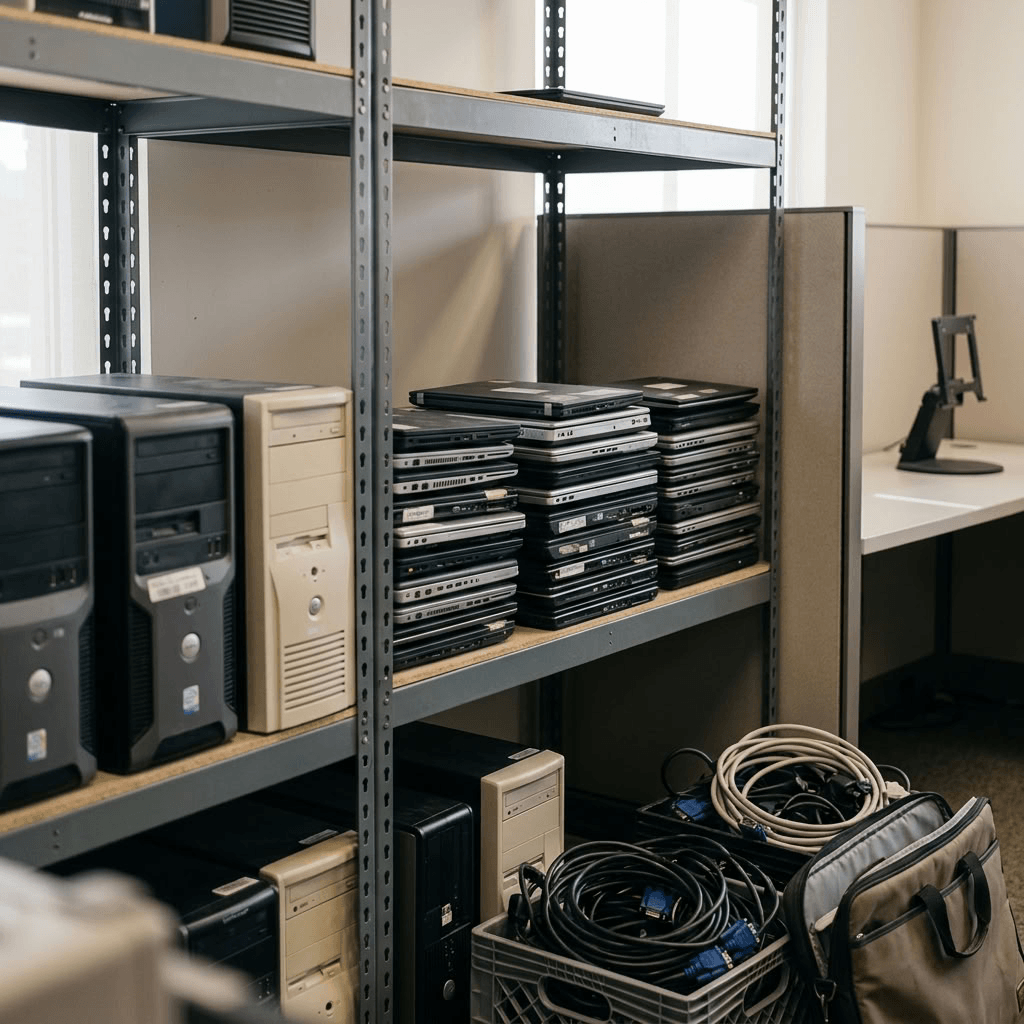
Before transporting everything to your new location, determine which equipment is still useful and which hardware has reached the end of its lifecycle. Moving outdated or unused equipment can add unnecessary costs and take up valuable space in your new office. Consider whether your existing computers, servers, networking equipment, monitors, and other hardware still meet your business needs.
If you have equipment that is no longer required, IT asset remarketing can provide an opportunity to recover value from those assets. Businesses can also work with an experienced IT asset disposition provider to responsibly recycle equipment that has reached the end of its useful life.
Related: IT Hardware Recycling: 5 Signs Your IT Assets Are Outdated and Ready for Hardware Recycling
3. Analyze your new office’s technology infrastructure
Before moving in, conduct a thorough walkthrough of your new office to determine how your technology will be configured.
Consider the location of:
- Electrical outlets and power requirements
- Network and data connections
- Internet service
- Server and network equipment
- Workstations and monitors
- Printers and shared equipment
- Conference room technology
- Security and access-control systems
- Wireless access points
Understanding the layout of your new office ahead of time allows your IT team or relocation provider to identify infrastructure requirements before employees arrive. It can also help prevent last-minute problems, such as insufficient power, poor Wi-Fi coverage, or network connections being located in inconvenient areas.
4. Protect your data during the move
Data security should be a priority throughout any office technology relocation.
Before disconnecting and transporting your equipment, make sure critical business data is backed up and that backups are stored securely. Depending on your systems, this may include local backups as well as cloud-based or off-site backups. You should also consider how equipment will be handled during transportation. Computers, servers, storage devices, and networking equipment can be damaged if they are not properly packaged and transported.
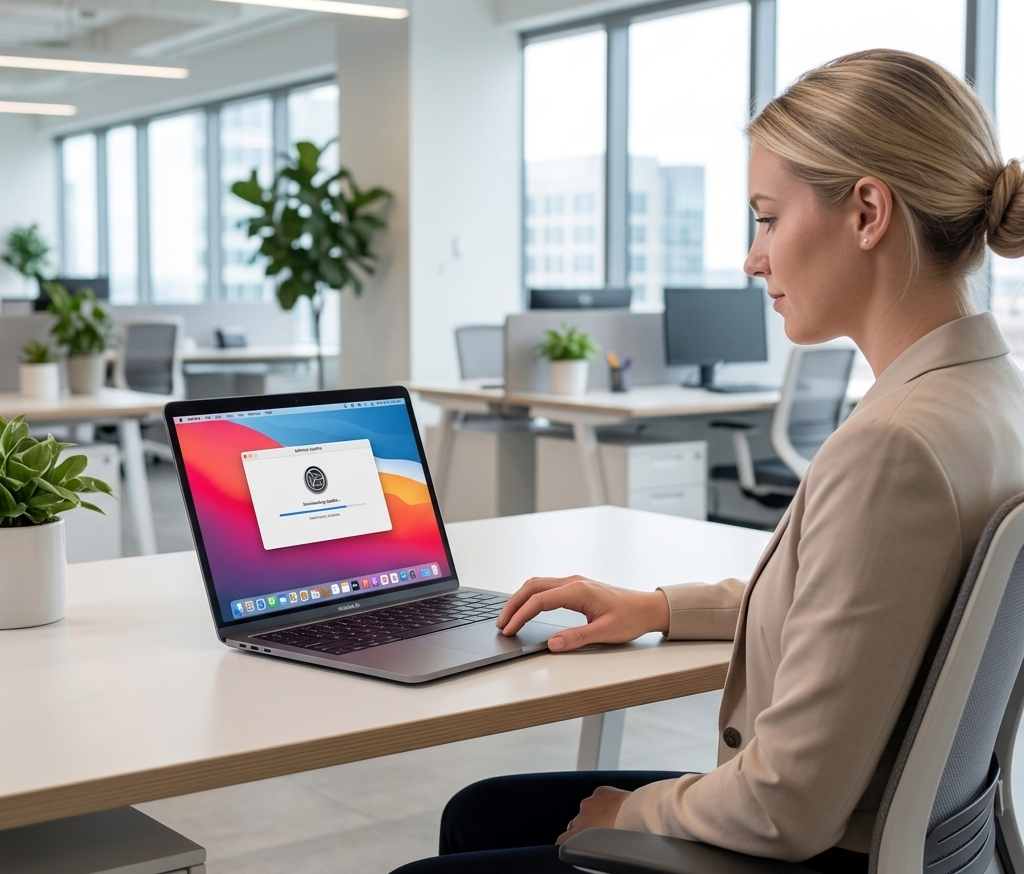
If you are retiring or selling hardware as part of the move, make sure sensitive information is securely removed before the equipment leaves your facility. Simply deleting files or performing a standard factory reset may not be enough to protect confidential business or client information. A certified IT asset disposition provider can help with secure data destruction, equipment remarketing, and responsible recycling as part of the office technology relocation process.
Related: What is the Proper Way to Recycle E-Waste? Guide to Technology Recycling
Make your office technology relocation easier with Keystone
Without proper planning, moving IT equipment can result in unnecessary downtime, data security risks, and unexpected costs. By planning your office technology relocation early, evaluating your existing equipment, preparing your new infrastructure, and protecting your data, you can make the transition significantly smoother.
If your business has outdated or unwanted IT equipment that you need to sell, recycle, or securely dispose of as part of your move, contact Keystone Technology Management to learn more.
Learn more:
Importance of Data Destruction: Why Your Business Should Consider a Data Destruction Service
Risks of Improper IT Asset Disposal: Why Secure Data Destruction Matters
How to Destroy Old Hard Drives: Guide to the Best Way to Destroy Old Drives
Explore more:
Data destruction services
E-waste recycling
IT refurbishment & redeployment service