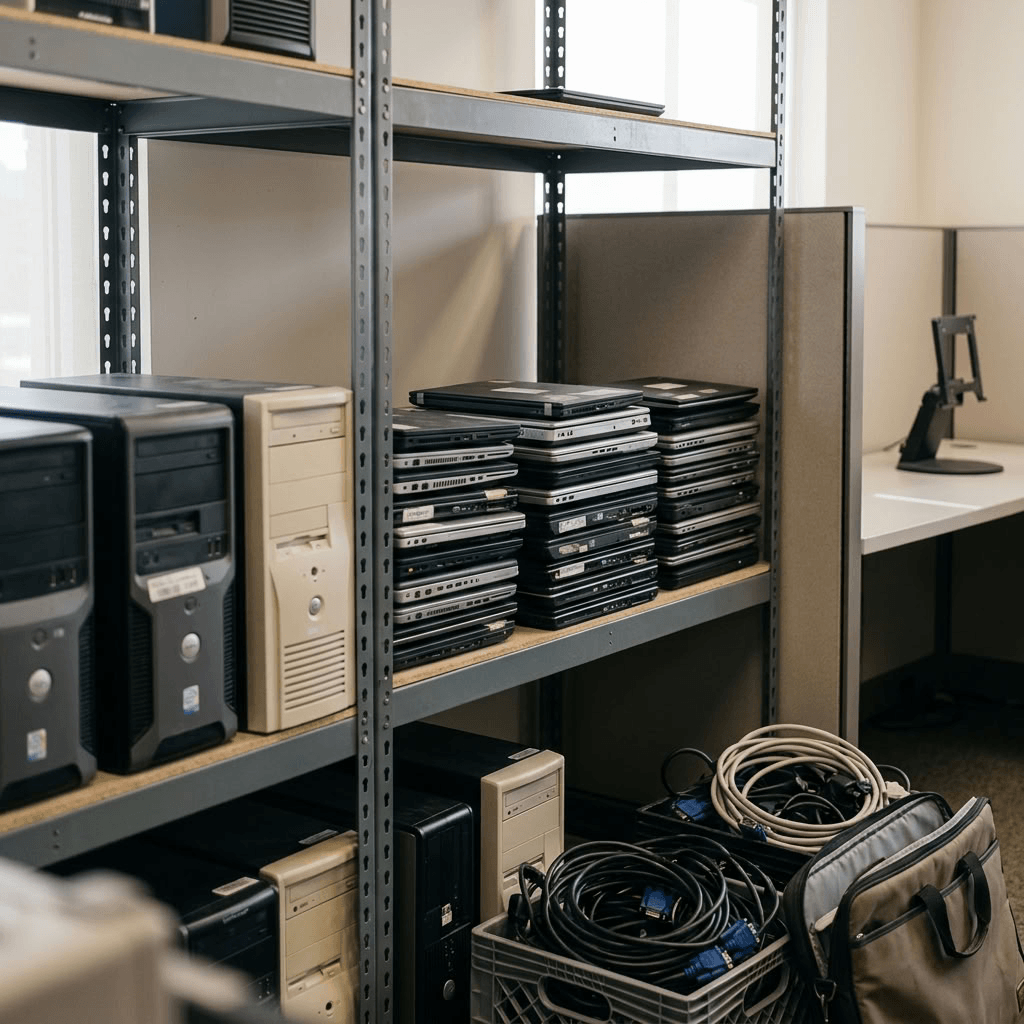

When your organization retires computers, servers, hard drives, or other IT assets, protecting the data stored on those devices doesn’t end when they leave your facility. Without a documented process, sensitive information can be exposed during transportation, storage, or disposal.
A secure chain of custody process for end-of-life data destruction ensures your retired IT assets remain protected from collection through final destruction or recycling. Whether you’re disposing of a few laptops or an entire data center, here is a guide on how a chain of custody works and why it is essential for protecting your business.
What is chain of custody?
A chain of custody is a documented record that tracks IT assets throughout the disposal process, from the moment equipment is collected until all data has been securely destroyed and the assets have been recycled or remarketed.
An ITAD chain of custody records every important detail, including:
- When equipment is collected at the site
- Who handled the assets at each stage
- Asset identification and serial numbers
- Transportation records
- Arrival at the processing facility
- Data destruction method
- Date and time of destruction
By creating a paper trail, individuals are able to receive full transparency of the disposal process. Apart from IT hardware, many other assets containing sensitive information, like legal documents, also have a chain of custody process.
How the secure chain of custody process works
A professional IT asset disposition (ITAD) provider follows strict procedures to ensure every asset is tracked and protected throughout the disposal process. The diagram below illustrates the four stages of a secure chain of custody process for end-of-life data destruction, from on-site pickup to final compliance documentation. Each stage is designed to protect sensitive information and provide a complete audit trail.

1. On-Site IT Asset Pickup
The process begins with secure on-site collection of your retired IT assets. Before equipment leaves your facility, each device is inventoried and documented to establish the beginning of the chain of custody. This creates a verifiable record of every asset collected.
2. Securely Pack & Prepare for Transport
After inventory is complete, the equipment is securely packaged and prepared for transportation. Assets are protected from damage and unauthorized access while in transit, with transfer records documenting who handled the equipment and when it changed custody.
3. Data Destruction & Asset Audit
Once the equipment arrives at the secure processing facility, each asset is verified against the original inventory. Devices then undergo certified data destruction or secure data sanitization, depending on your organization’s requirements. Throughout this stage, every asset is audited and tracked to ensure complete accountability.
4. Compliance Reporting & Documentation
After processing is complete, comprehensive documentation is generated to verify that every asset was handled securely. This includes detailed reporting and a Certificate of Destruction, providing proof that your retired equipment was processed in accordance with industry standards and regulatory requirements.
Why is a secure chain of custody important?
A documented chain of custody is about much more than recordkeeping, it protects your organization from security, financial, and legal risks.
Protects sensitive data
Retired IT equipment often contains confidential customer information, employee records, financial data, intellectual property, and business documents. A documented chain of custody minimizes the risk of unauthorized access while devices are awaiting destruction.
Supports regulatory compliance
Beyond providing extra security, a chain of custody is also important for legal purposes. There are many legal requirements and standards, including HIPAA, among several others, that require evidence of regulatory compliance. If there is a data breach during the disposal process, the chain of custody will provide extensive documentation so that any areas of weakness can be identified. Given how expensive regulatory fines are for privacy breaches, a detailed chain of custody is a must for any company handling sensitive data.
Provides complete accountability
Every individual who handles the equipment is documented throughout the process. If an issue occurs, organizations can quickly identify where the problem happened and verify that proper procedures were followed.
Reduces business risk
Data breaches resulting from improperly discarded equipment can lead to significant financial losses, regulatory penalties, and reputational damage. Following a secure chain of custody process helps reduce these risks while protecting your organization’s sensitive information.
How to choose a certified ITAD provider
Not all IT asset disposal providers follow the same security standards. When selecting an ITAD partner, look for a company that offers:
- Documented chain of custody procedures
- Secure transportation
- Serialized asset tracking
- Certified data destruction
- Certificates of Destruction
- Environmentally responsible electronics recycling
- Compliance with recognized industry standards
Working with an experienced provider ensures your retired IT assets are managed securely from pickup through final processing.
Secure your end-of-life IT assets with Keystone Technology Management
At Keystone Technology Management, we follow a secure chain of custody process for end-of-life data destruction to help organizations protect sensitive information while maintaining compliance throughout the IT asset disposition process. From secure collection and transportation to certified data destruction and environmentally responsible recycling, our documented procedures provide complete visibility and accountability every step of the way.
Contact Keystone Technology Management today to learn more about our certified data destruction, IT asset disposition, and IT equipment remarketing services.
Learn more:
IT Asset Lifecycle Management Best Practices: A Guide for Businesses and Organizations
How to Build a Data Destruction Policy That Protects Your Organization
How to Minimize E-Waste: Steps to Reduce Corporate E-Waste
Explore:
Data destruction services
Hard drive shredding services
Our secure ITAD recycling facility