Managing IT assets is about keeping track of devices from procurement and deployment to secure IT disposal and e-waste recycling. Businesses and organizations need a structured IT asset lifecycle management strategy to control costs, reduce security risks, maintain compliance, and maximize the resale value of their technology investments.
In this guide, we’ll break down the most effective IT asset lifecycle management best practices, why they matter, and how organizations can improve operational efficiency while protecting sensitive data throughout the entire lifecycle of their IT assets.
What is IT asset lifecycle management?
IT asset lifecycle management is the process of managing an organization’s IT assets from acquisition to retirement. This includes hardware such as laptops, servers, mobile devices, networking equipment, and storage systems, as well as related software and data-bearing devices. Without proper lifecycle management, businesses often face unnecessary costs, lost assets, security vulnerabilities, and compliance risks.
A structured lifecycle management strategy helps organizations:
- Track and manage IT inventory
- Optimize hardware performance and lifespan
- Improve budgeting and forecasting
- Strengthen cybersecurity and compliance
- Reduce downtime and operational inefficiencies
- Ensure secure and environmentally responsible asset disposal
Learn more: What types of businesses need IT asset disposition?
IT asset lifecycle management best practices
To build an effective lifecycle management strategy, businesses and organizations can follow these IT asset lifecycle management best practices:
1. Maintain a centralized asset inventory
One of the most important IT asset lifecycle management best practices is maintaining a centralized, real-time inventory of all IT assets that improves accountability and simplifies audits and reporting.
Your inventory should track:
- Device type and specifications
- Serial numbers and asset tags
- Assigned users and locations
- Purchase and warranty dates
- Maintenance history
- End-of-life status
2. Automate IT asset tracking
Manual tracking processes are time-consuming and prone to errors. Automated asset management solutions help organizations improve accuracy and efficiency so they can focus on strategic initiatives instead of administrative tasks.
Automation can support:
- Real-time inventory updates
- Usage monitoring
- License management
- Maintenance scheduling
- Compliance reporting
- End-of-life alerts
3. Standardize IT hardware and processes
Standardization simplifies IT asset management, improves compatibility, and reduces support complexity, improving operational consistency and lowers support costs..
Organizations should standardize:
- Approved device models
- Security configurations
- Deployment procedures
- Maintenance schedules
- Disposal protocols
4. Implement strong security controls
Every unmanaged or improperly retired device can become a potential entry point for cyber threats. Security should be integrated throughout the entire IT asset lifecycle.
IT asset lifecycle management best practices for security include:
- Endpoint protection
- Multi-factor authentication
- Encryption
- Access management policies
- Remote wipe capabilities
- Secure disposal procedures
5. Schedule regular audits
Routine audits help organizations identify missing assets, outdated equipment, and compliance gaps, improving operational accountability.
Audits should verify:
- Physical asset locations
- User assignments
- Device condition
- Software licensing compliance
- Disposal documentation
6. Develop a clear data destruction policy
Many businesses focus heavily on procurement and deployment and less on IT asset retirement planning. Every business or organization needs to implement a strong data destruction policy to ensure your information is securely handled at the end of its lifecycle, reducing the risk of data breaches, fines, and operational disruption.
An effective end-of-life strategy should include:
- Secure data destruction
- Certified recycling partners
- Refurbishment opportunities
- Resale asset value recovery
- Environmental compliance
- E-waste recycling
Learn more on how to build a data destruction policy that protects your organization.
7. Prioritize environmental sustainability
Sustainable IT practices are becoming increasingly important for businesses looking to reduce environmental impact and support ESG initiatives.
Organizations can improve sustainability by:
- Extending device lifespans
- Refurbishing reusable equipment
- Recycling electronics responsibly
- Reducing unnecessary purchases
- Partnering with environmentally certified vendors
Learn more about e-waste recycling.
Stages of IT asset lifecycle management
Understanding each phase of the lifecycle is critical for implementing effective IT asset lifecycle management best practices.
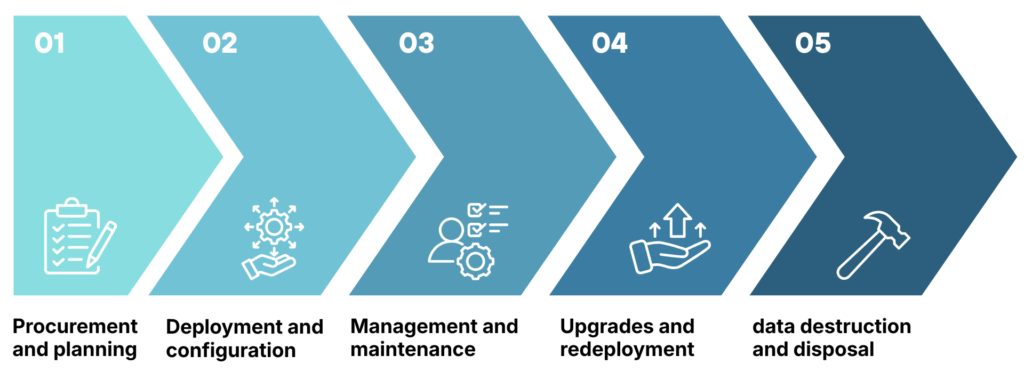
| Lifecycle stage | Description | Action items |
| 1. Procurement and planning | Assess operational needs, scalability, compatibility, and long-term costs before purchasing IT assets. | Standardize hardware models, evaluate total cost of ownership (TCO), forecast replacement cycles, purchase scalable equipment, work with trusted IT asset management providers. |
| 2. Deployment and configuration | Configure, document, and deploy assets properly to ensure consistency and visibility. | Asset tagging, inventory tracking, software installation, security configuration, user assignment documentation, network testing. |
| 3. Management and maintenance | Monitor and maintain IT assets throughout their operational life to maximize performance. | Software and firmware updates, patch management, performance monitoring, preventative maintenance, warranty tracking, regular audits. |
| 4. Upgrades and redeployment | Upgrade or reassign devices to extend their useful life and support changing business needs. | Hardware upgrades, secure redeployment, evaluating operational compatibility, maintaining security compliance. |
| 5. Data destruction and disposal | Securely remove sensitive data and dispose of IT assets responsibly at end-of-life. | Hard drive shredding, hard drive erasure, certificates of destruction, chain of custody documentation, electronics recycling. |
Why IT asset lifecycle management matters
Organizations that fail to manage IT assets properly often experience:
- Lost or untracked devices
- Increased IT spending
- Data breaches from retired devices
- Compliance violations
- Inefficient hardware utilization
- Unplanned downtime
By implementing strong IT asset lifecycle management best practices, businesses and organizations can reduce risk, improve operational efficiency, extend asset value, and protect sensitive business data throughout every stage of the lifecycle.
Learn more: Why your business should consider a data destruction service
How Keystone supports IT asset lifecycle management
Effective IT asset lifecycle management requires more than just tracking equipment. Businesses and organizations need secure processes, reliable reporting, certified data destruction, and responsible recycling solutions.
Keystone helps organizations manage end-of-life IT assets through secure and compliant IT asset disposition services, including:
- Secure hard drive shredding
- Certified data destruction
- Electronics recycling
- Asset value recovery and remarketing
- Chain of custody tracking
- Environmental compliance support
Contact Keystone today to learn more about IT asset lifecycle management best practices and how you can dispose of your IT assets securely and safely when they reach the end of their lifecycle.
Learn more:
How chain of custody is critical to electronic data destruction
How you should properly recycle electronics
What is the role of data destruction in cybersecurity?
Explore more:
ITAD services for regulated industries