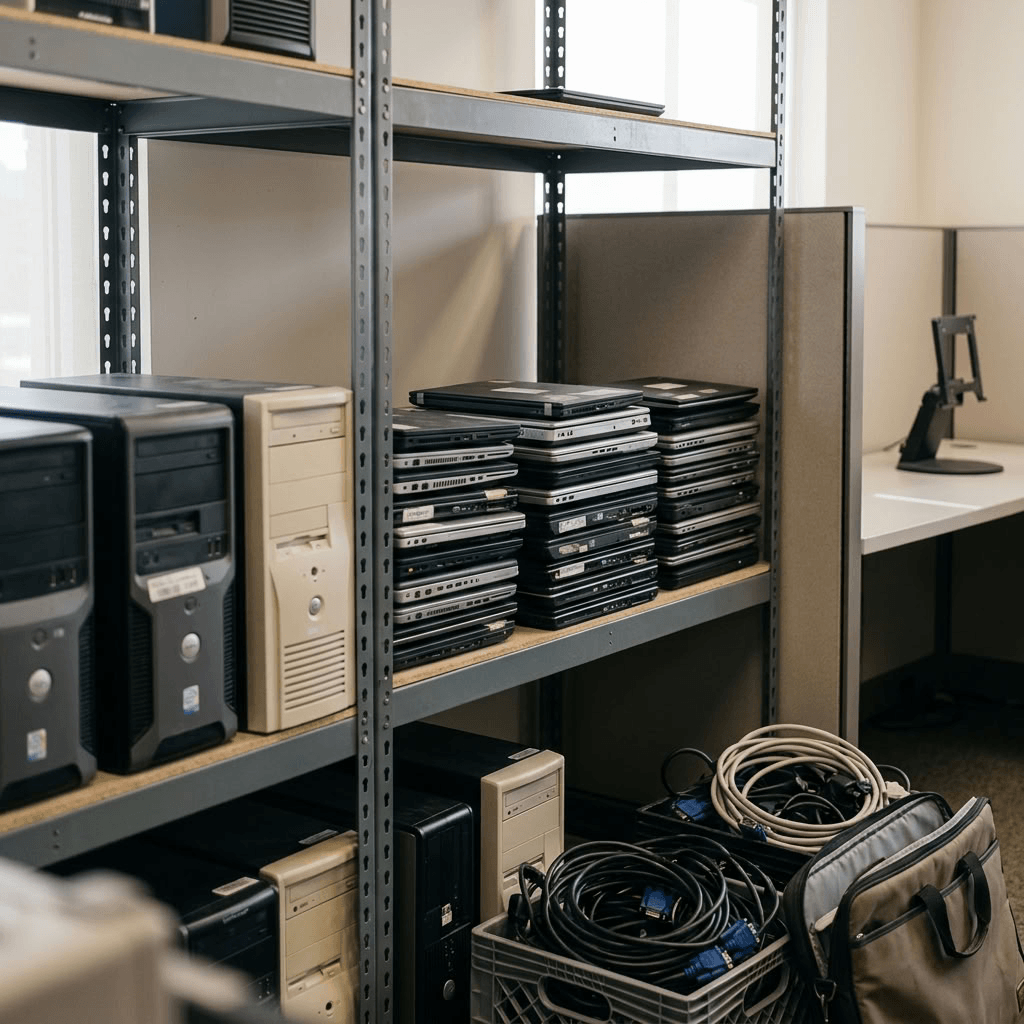

Technology upgrades are essential for modern corporate organizations. New computers, servers, networking equipment, and storage systems help improve performance, security, and productivity. However, every upgrade creates another challenge: what should happen to the old equipment? That’s where a certified data destruction service comes in.
When electronics are discarded, they become electronic waste, commonly known as e-waste. Devices such as computers, hard drives, smartphones, monitors, and networking equipment often contain hazardous materials that can negatively impact the environment if they are not properly handled. Because electronic products commonly contain toxic materials like lead, e-waste remains one of the most potentially hazardous sources of pollution to the environment. Unfortunately, only a fraction of the known e-waste gets appropriately recycled. Around the world, roughly 50 million tons of e-waste is generated every year. As a result, e-waste is a major environmental concern that needs to be taken seriously.
Organizations can take practical steps to reduce e–waste, extend the life of their technology, and ensure equipment is disposed of responsibly. Understanding how to minimize e-waste can help lower environmental impact, improve sustainability initiatives, and maximize the value of your technology investments.
Why reducing e-waste matters
E-waste contains valuable materials such as copper, aluminum, steel, and precious metals that can often be recovered and reused. Unfortunately, when electronics end up in landfills, these materials are lost while harmful substances may be released into the environment. Learning how to reduce corporate e-waste benefits the planet by:
- Conserving natural resources
- Reducing landfill waste
- Lowering environmental pollution
- Supporting the circular economy
- Protecting sensitive data through responsible disposal practices
Organizations that actively work to minimize e-waste also demonstrate environmental responsibility while helping reduce the growing volume of discarded electronics worldwide.
Related: How You Should Properly Recycle Electronics
5 Ways to reduce corporate e-waste
If you want to learn how to reduce e-waste, there are several simple but effective strategies that can make a significant impact. Many of them are relatively simple and easy enough for anyone to follow. Here is an infographic that shows five ways your organization can reduce e-waste.
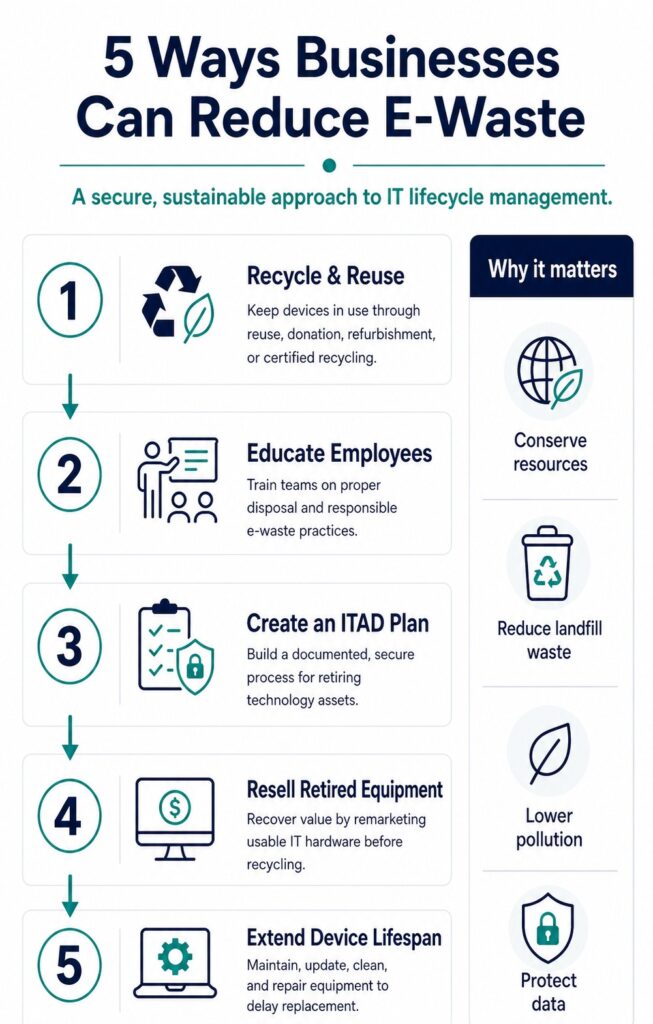
Here are some of the steps you can take to minimize e-waste:
1. Recycle and reuse electronics whenever possible
2. Educate employees about e-waste
3. Create an IT asset disposition plan
4. Sell retired IT equipment for reuse
5. Consider the lifespan of your devices
1. Recycle and reuse electronics whenever possible
So long as they still function properly, you should always recycle your unused electronics to the best of your ability. One of the most effective ways to reduce e-waste is to keep electronics in use for as long as possible. Before disposing of old equipment, determine whether it can be reused, refurbished, donated, or resold.
Partner with certified electronics recycling providers
Many organizations replace equipment that still functions properly. You can find places in your area where you can donate unused electronic devices to extend their life and prevent unnecessary waste. Another option is to find a certified IT asset disposition partner to help with e-waste recycling to make sure your old equipment gets disposed of properly. Reusing and recycling electronics helps reduce e–waste, conserves valuable resources, and keeps devices out of landfills. Before transferring ownership of any electronic device, ensure all data is securely erased or destroyed with hard drive erasure or hard drive shredding to protect sensitive information.
2. Educate employees about e-waste
One of the keys to improving e-waste recycling efforts revolves around educating people about what qualifies for recycling services and formulating a plan. Increasing awareness of e-waste and the fact that you can recycle old technology can help improve environmental efforts.
Creating a culture of responsible electronics disposal
Your employees should understand which items can be recycled, how to properly dispose of electronic devices, and why responsible recycling matters. Education plays an important role in helping organizations understand how to reduce e-waste and adopt more sustainable technology practices. The more employees know about responsible disposal methods, the easier it becomes to minimize e-waste across the organization. Learn more about IT asset lifecycle management best practices.
3. Create an IT asset disposition plan
Even if you know how to reduce e-waste, creating a data destruction policy is still important. When your organization begins to upgrade to new technology, ensure a plan is in place to take the outdated devices to a proper recycling facility or service that is properly equipped to handle the process.
A data destruction policy reduces security risks
Know which devices and what parts can be recycled and act on the plan to help reduce the world’s amount of e-waste. Learn more on how to build a data destruction policy.
4. Sell retired IT equipment for reuse
Selling retired IT equipment is another effective way to reduce e-waste and extend the lifecycle of valuable technology assets. Many organizations replace computers, servers, networking equipment, and storage devices before they reach the end of their usable life.
Recover value from retired technology assets
Rather than sending these assets for recycling immediately, consider whether they have resale value. Refurbished IT equipment can often be redeployed by other organizations, helping to reduce electronic waste while recovering a portion of your original investment.
Protect data before selling used IT equipment
Before selling any technology assets, ensure all data is securely erased or destroyed using certified data destruction methods. Working with an experienced, certified IT asset disposition provider can help maximize asset recovery value while ensuring compliance with data security and environmental standards. Resale and remarketing are important steps to reduce corporate e-waste, helping to support the circular economy while generating additional value from retired technology.
5. Consider the lifespan of your devices
A key part of learning how to minimize e-waste is getting the most value from the equipment you already own. There are many steps you can take to prolong the lifespan of your electronics so that you won’t have to purchase new ones as frequently.
Proper maintenance improves hardware longevity
Regular maintenance, cleaning, software updates, and hardware upgrades can significantly extend the lifespan of computers, servers, and other electronic devices. In many cases, upgrading components such as memory, storage, or batteries can delay the need for a full replacement. For example, make efforts to properly clean your electronic devices. Doing so will help maintain their condition and allow them to last longer.
When purchasing new technology, consider products that are durable, repairable, and designed for long-term use. Extending the life of your equipment is one of the simplest and most cost-effective ways to reduce e-waste within your organization.
Looking for an e-waste solution? We can help.
Take the right steps to reduce corporate e-waste with secure IT asset disposition, certified data destruction, electronics recycling, and equipment remarketing services at Keystone Technology Management. Whether you’re upgrading your infrastructure, decommissioning equipment, or looking for responsible hard drive shredding services, our team can help ensure your retired technology is handled securely and sustainably.
If you’re looking for ways to reduce electronic waste and learn how to minimize e-waste within your organization, Keystone Technology Management can help. Contact Keystone today to learn more about our secure and environmentally responsible technology disposition services.
Learn more:
To Shred or to Erase? That is the Question.
IT Asset Lifecycle Management Best Practices: A Guide for Businesses and Organizations
What is R2 Certification? Everything Businesses Need to Know About R2 Recycling
Explore:
Secure data destruction services
Hard drive erasure
Hard drive shredding
E-waste recycling services