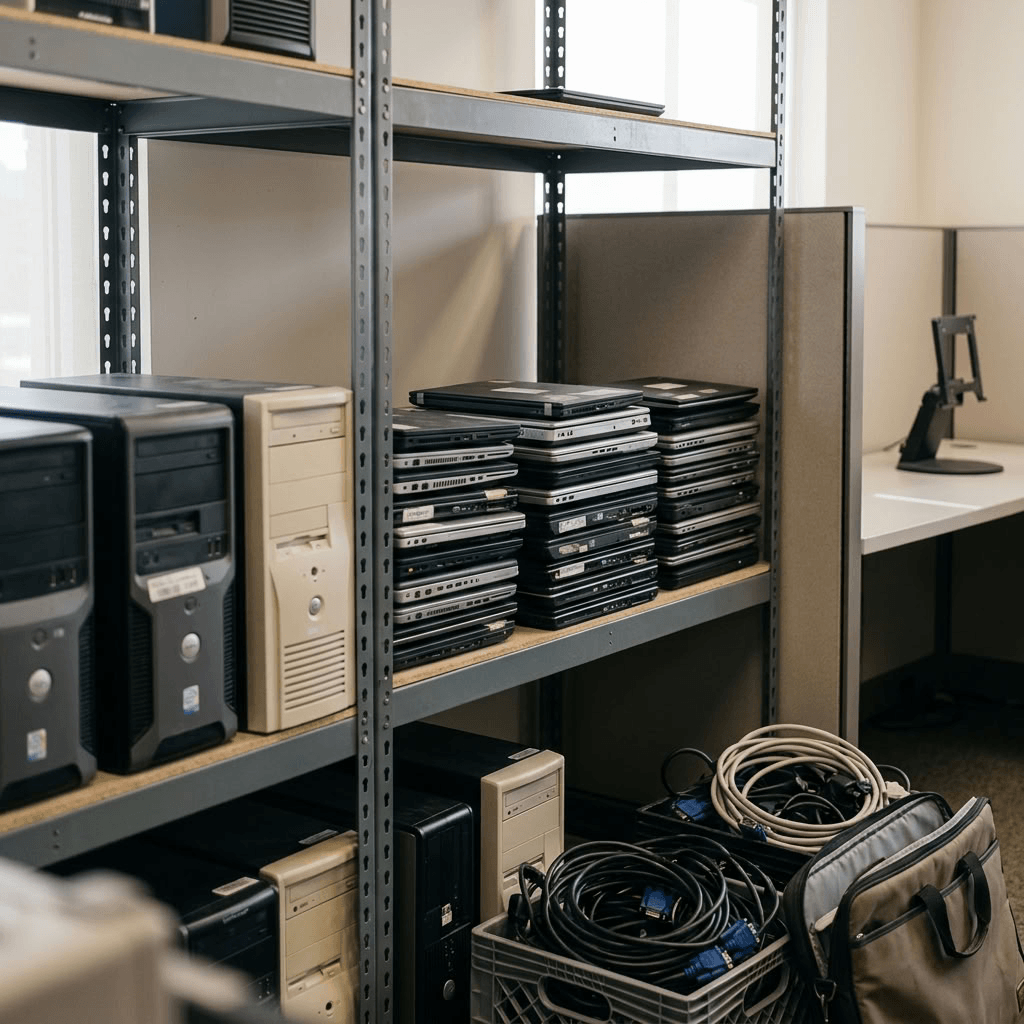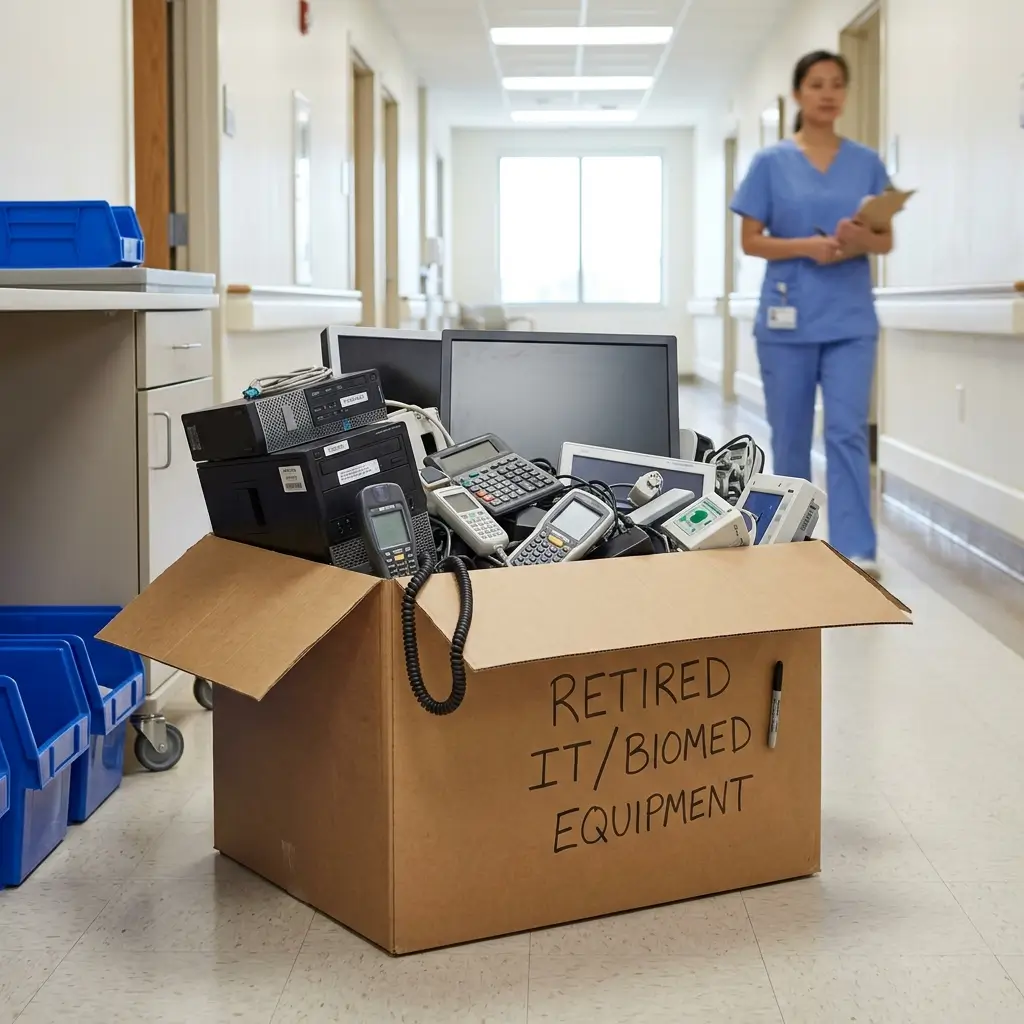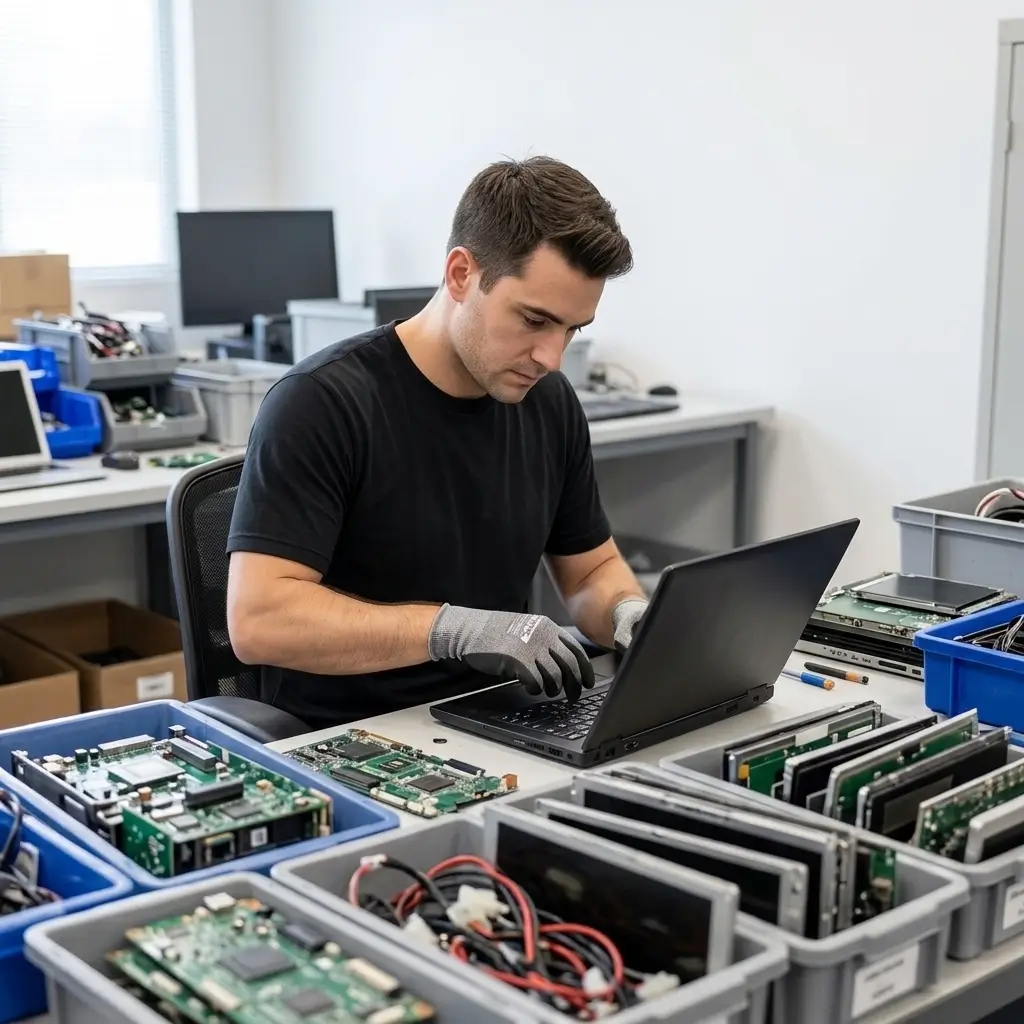
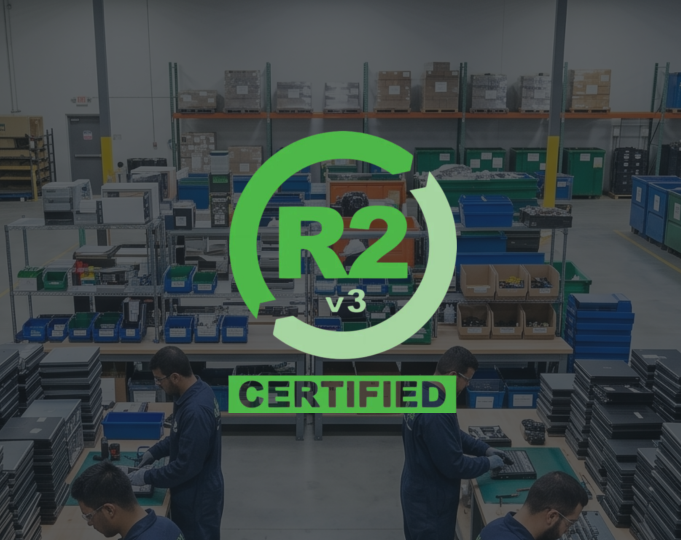
As electronic waste continues to grow and organizations replace outdated IT equipment at a faster pace, understanding R2 certification requirements has become increasingly important for electronic recyclers and IT asset disposition (ITAD) providers. Businesses today are expected to manage retired electronics responsibly while protecting sensitive data, maintaining environmental compliance, and ensuring proper downstream handling of materials.
This is where an R2 certification plays a critical role.
An R2 certification provides a framework for electronic recyclers to implement best practices for data security, environmental protection, worker health and safety, and operational accountability. In this guide, we break down the key R2 certification requirements and explain how to get R2 certification for ITAD providers.
What is an R2 certification?
An R2 certification is one of two certified recycling standards officially recognized by the United States Environmental Protection Agency, designed for responsible reuse and recycling of electronic equipment.
The R2 certification was created by Sustainable Electronics Recycling International (SERI) to establish best practices for IT asset disposition providers. R2 is currently on version 3, so the most up to date standard is R2v3.
The goal of R2 recycling is to reduce environmental harm, extend the lifecycle of electronics where possible, and ensure sensitive data is properly destroyed before equipment is recycled or remarketed. Unlike basic recycling programs, R2 certification focuses heavily on accountability, traceability, and operational controls throughout the entire recycling chain.
Learn more: What is R2 Certification? Everything Businesses Need to Know About R2 Recycling
How long does it take to get an R2 certification?
The process of completing a R2 certification typically takes ITAD providers and electronics recyclers between 8 to 12 months to complete, depending on the size of the facility, existing operational processes, and overall readiness for compliance.
During this process, facilities must undergo independent third-party audits to verify compliance with the R2 certification standard, environmental and safety management systems, and data security requirements.
What are the R2 certification requirements?


The R2 certification process requires electronics recyclers and ITAD providers to implement strict operational, environmental, health and safety, and data security procedures that align with the R2 Standard.
Key R2 certification requirements:
1. Education and training
ITAD providers must first understand the requirements outlined in the R2 certification to ensure teams understand all R2 certification requirements before implementation begins. This includes reviewing the R2 Standard documentation, R2 Equipment Categorization (REC) guidance, and related codes of practice.
Training resources and educational materials are available through SERI to help ITAD providers understand compliance expectations and operational requirements.
2. License application
Before beginning the formal certification audit process, ITAD providers must complete an R2 license application. This step is required before engaging with a SERI-approved certification body for contract review and audit scheduling.
This step formally initiates the compliance process.
3. Implementation of R2 requirements
ITAD providers must document and implement processes that align with the R2 Standard.
This includes establishing procedures for:
- Secure data destruction and sanitization
- Environmental management
- Worker health and safety
- Material tracking and reporting
- Downstream vendor management
- Legal compliance
The R2 certification also requires certification to an approved Environmental, Health, and Safety Management System. ITAD providers involved in repair, IT refurbishment and redeployment, or brokering activities may also require certification to an approved Quality Management System.
This is one of the most critical phases of the R2 certification requirements.
4. Collecting records and evidence
As part of the certification process, ITAD providers must collect records and operational evidence demonstrating compliance with R2 certification requirements.
Examples may include:
- Data destruction records
- Equipment testing records
- Material tracking documentation
- Downstream vendor documentation
- Shipping and export compliance records
- Environmental monitoring records
Auditors review this information during the certification audit process to verify operational compliance and confirm adherence to R2 certification requirements.
5. Internal audits
Before the official certification audit, ITAD providers must conduct internal audits to assess readiness and identify any corrective actions needed.
Internal audits may include reviews of:
- R2 audits
- Environmental Management System audit
- Health & Safety Management System audit
- Legal compliance audit
- Downstream vendor audits
- Internal data security & sanitization audit
- Quality Management System audit
These audits help facilities identify gaps and improve compliance before the formal audit process begins.
6. Certification audit
To become R2 certified, facilities must pass a formal audit conducted by a SERI-approved certification body.
First-time certifications require a two-stage audit process:
Stage 1 audit: The first stage focuses primarily on reviewing documented procedures, policies, and management systems.
Stage 2 audit: Typically conducted 30 to 60 days later, the second stage focuses on facility operations, observing activities onsite, reviewing records, and verifying implementation of R2 requirements.
Once certification is approved, the ITAD provider is added to the SERI directory of R2 certified facilities.
7. Maintaining R2 certification
To maintain a R2 certification, ITAD providers must pass annual audits to demonstrate ongoing compliance with the R2 Standard and continue paying annual R2 license fees.
This ongoing maintenance helps ensure adherence to all R2 certification requirements, allowing R2 certified ITAD providers to continuously improve and maintain responsible recycling and data security practices year after year.
Partner with Keystone, your R2 certified ITAD provider
At Keystone Technology Management, we help businesses securely and responsibly manage retired IT assets through R2 certified electronics recycling, secure data destruction, and asset value recovery. Our team prioritizes transparency, environmental responsibility, and has a secure chain of custody to help organizations confidently manage their electronic waste and data security requirements.
If your organization is looking for a trusted R2 certified electronics recycling partner, contact Keystone Technology Management to learn more about our ITAD, e-waste recycling, and asset value recovery solutions.
Learn more:
How to Build a Data Destruction Policy That Protects Your Organization
IT Asset Lifecycle Management Best Practices: A Guide for Businesses
Explore more:
Secure data destruction services