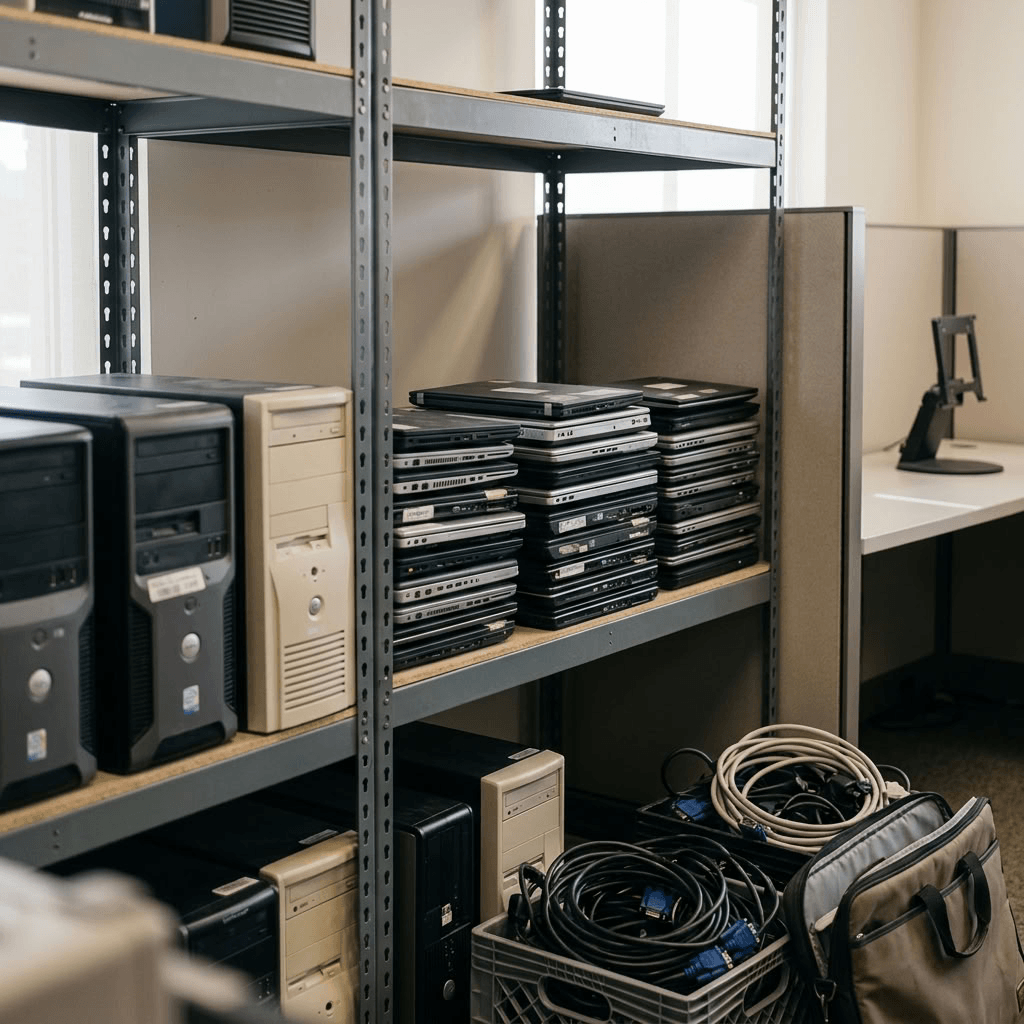
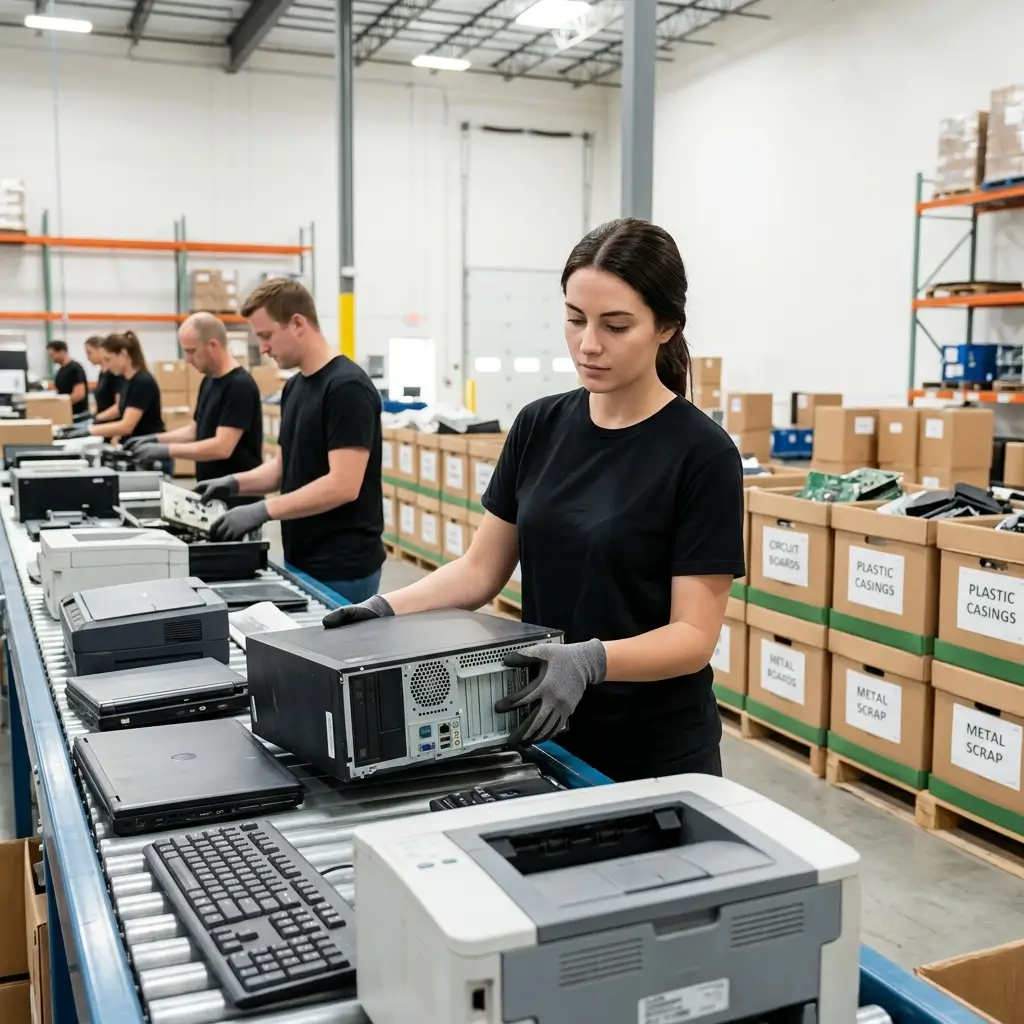
Businesses retire thousands of computers, servers, hard drives, mobile devices, and other electronic equipment as technology continues to evolve every year. Without proper recycling, discarded electronics can contribute to environmental pollution, create data security risks, and result in unnecessary loss of valuable materials.
In this guide, we’ll explain what e-waste is, why it’s a growing global issue, and the importance of e waste recycling for businesses.
What is e-waste?
E-waste refers to discarded electronic devices and components that have reached the end of their useful life. Common examples include:
- Desktop computers and laptops
- Servers and networking equipment
- Hard drives and SSDs
- Mobile phones and tablets
- Printers and copiers
- Monitors and televisions
- Cables, accessories, and peripherals
Many of these devices contain hazardous materials as well as valuable metals that can be safely recovered and reused through certified recycling processes.
What is e-waste recycling?
E-waste recycling is the process of collecting, securely processing, and recovering materials from discarded electronic devices so they can be reused or responsibly disposed of. Rather than sending outdated electronics to a landfill, certified e-waste recyclers dismantle equipment, separate reusable components, recover valuable materials, and safely manage hazardous substances.
An e-waste recycling process typically includes:
- Collection and transportation of retired IT assets
- Secure data destruction through data erasure or physical hard drive destruction
- Equipment evaluation for reuse or refurbishment
- Asset value recovery through resale or remarketing when appropriate
- Responsible recycling of end-of-life electronics
- Recovery of valuable materials such as copper, aluminum, gold, and other precious metals
- Documentation and chain of custody for compliance and auditing purposes
Learn more: What is the Proper Way to Recycle E-Waste? Guide to Technology Recycling
The importance of e waste recycling
The importance of e waste recycling extends far beyond simply keeping electronics out of landfills. Proper recycling protects the environment, conserves natural resources, safeguards sensitive data, and supports a more sustainable technology lifecycle.
1. Prevents environmental pollution
Electronic devices contain materials such as lead, mercury, cadmium, and other substances that can be harmful if improperly disposed of. When electronics are thrown into landfills, these materials can leach into soil and groundwater or release harmful pollutants into the air.
Certified e-waste recycling ensures these materials are safely handled and processed according to environmental regulations.
Learn more: How to Minimize E-Waste: Steps Businesses Can Take To Reduce E-Waste
2. Protects sensitive business data
One of the biggest risks of disposing of old electronics is the confidential information they may still contain. Computers, servers, smartphones, and storage devices often retain sensitive business or customer data even after files have been deleted.
Working with a certified ITAD provider ensures all data-bearing devices undergo secure data destruction before recycling, helping organizations remain compliant with industry regulations and reduce the risk of data breaches.
3. Supports regulatory compliance
Many industries must follow strict regulations regarding the disposal of electronic devices and the protection of sensitive information. Improper disposal may expose organizations to compliance violations, legal risks, and reputational damage.
Using a certified recycler helps demonstrate responsible environmental practices while meeting applicable federal, state, and industry requirements.
4. Reduces landfill waste
Millions of tons of electronic waste are generated each year, and the volume continues to grow as technology advances. Recycling extends the life of valuable materials while reducing the amount of waste entering landfills.
As organizations upgrade technology more frequently, responsible recycling plays an increasingly important role in building a more sustainable future.
Why e-waste is a growing issue
As technology becomes integrated into nearly every aspect of our lives, the volume of electronic waste continues to grow. According to the World Economic Forum, everything from smartphones and laptops to household appliances, toys, lighting, and even clothing now contains electronic components. With billions of connected devices in use worldwide, businesses and consumers are replacing technology more frequently than ever before.
This rapid growth has made e-waste the fastest-growing waste stream globally. In the United States alone, e-waste accounts for an estimated 70% of the toxic waste found in landfills. When electronics are improperly discarded, hazardous materials such as lead, mercury, and cadmium can contaminate soil and groundwater, creating long-term environmental risks. Partnering with a certified IT asset disposition (ITAD) provider helps ensure retired electronics are securely processed, sensitive data is destroyed, and valuable materials are recovered instead of going to waste.
Why businesses should partner with a certified e-waste recycler
Not all recycling companies follow the same standards. Choosing a certified ITAD provider gives businesses confidence that their equipment will be managed securely, responsibly, and in accordance with recognized industry best practices. Before choosing an IT asset disposition (ITAD) company, consider the following factors:
- Cost considerations
- Verify the ITAD provider’s certifications
- Understand their data destruction methods
- Request proof of data destruction
- Review their chain of custody
Learn more on how to choose a certified ITAD provider for secure data destruction.
Our team at Keystone Technology Management maintains R2v3 certification and operates in compliance with applicable environmental and data security regulations, ensuring your retired IT assets are handled safely from pickup through final disposition.
Choose Keystone for responsible e-waste recycling
Understanding why it is important to recycle e-waste helps organizations make better decisions for both data security and environmental responsibility. Proper recycling reduces pollution, conserves valuable resources, protects confidential information, and supports regulatory compliance.
At Keystone Technology Management, we combine certified IT asset disposition, secure data destruction, and environmentally responsible recycling to help businesses dispose of retired technology with confidence.
Contact Keystone Technology Management today to schedule a secure electronics pickup or learn more about our certified e-waste recycling and ITAD services.
Learn more:
Risks of Improper IT Asset Disposal: Why Secure Data Destruction Matters
Importance of Data Destruction: Why Your Business Should Consider a Data Destruction Service
IT Asset Lifecycle Management Best Practices: A Complete Guide for Businesses and Organizations
R2 Certification Requirements: How to Get R2 Certification for Electronic Recyclers