Protecting Patient Data With a HIPAA-Compliant Hardware Refresh
More than 554,000 pounds of equipment managed with certified, controlled chain of custody.
At a glance
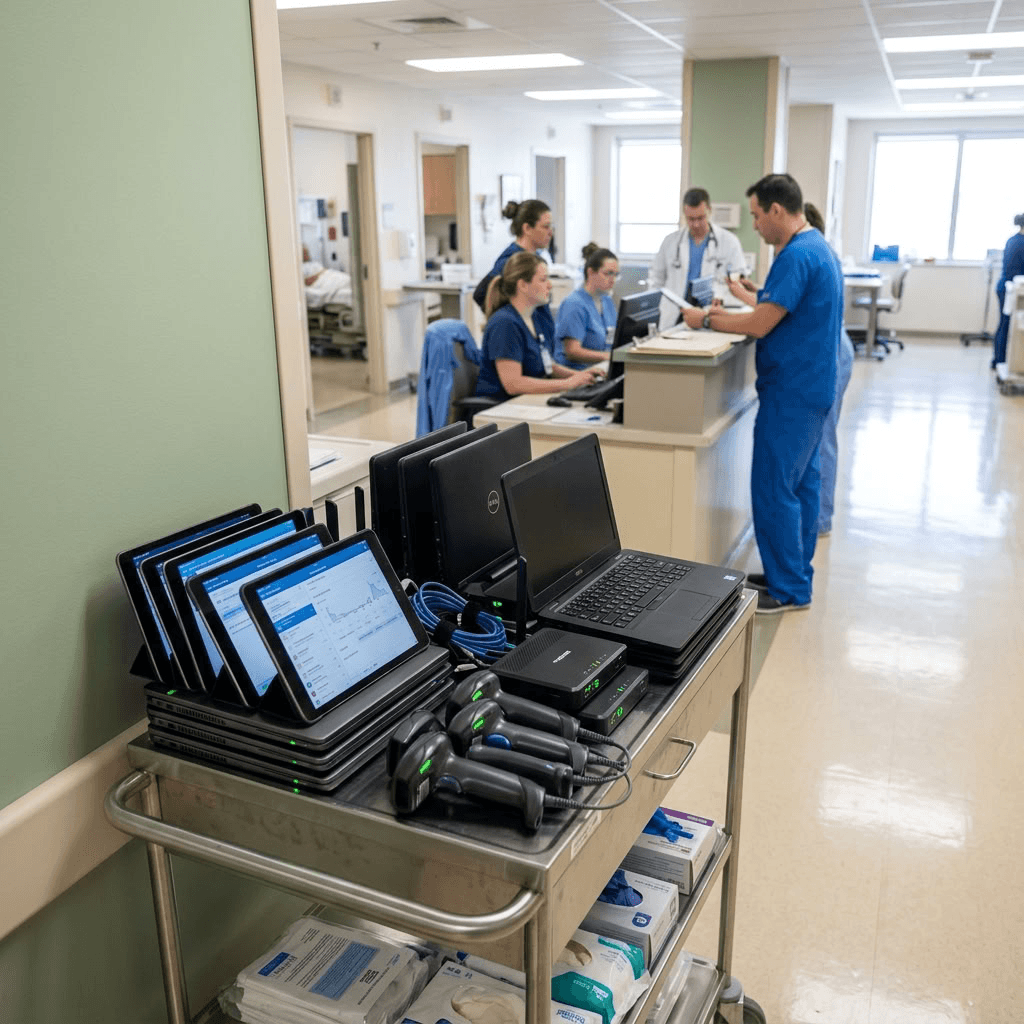
When a major regional health system began its Windows 11 transition, legacy IT equipment began accumulating across hospitals, outpatient facilities, specialty practices, corporate offices, and data centers throughout Pennsylvania and New Jersey.
The organization needed one accountable IT asset disposition (ITAD) program that could keep pace with refresh waves, reduce on-site storage pressure, protect data-bearing devices, and provide centralized documentation across a complex clinical footprint.
Keystone delivered a scalable, portal-enabled ITAD operating model, giving local teams a simple way to request pickups while giving central stakeholders visibility and control over every asset’s disposition.
THE CHALLENGE
Secure over 43,000 assets across 66 locations for a major regional healthcare system.
During the Windows 11 rollout, individual locations needed to:
Securely stage laptops, desktops, servers, monitors, and peripherals until collection.
Request service without relying on manual emails or ad hoc coordination.
Accommodate variable volumes, from routine device removals to large refresh events.
Maintain accountability for data-bearing equipment from pickup through approved erasure or physical destruction.
Reconcile assets, processing activity, and disposition records across a multi-location network.
For healthcare organizations, this level of control is essential: HIPAA’s Security Rule requires reasonable administrative, physical, and technical safeguards for electronic protected health information.
The solution
One repeatable program for secure collection, storage, processing, data protection, and reporting.
1. Portal-based pickup scheduling
Authorized users requested pickups through a preconfigured client portal, enabling consistent service requests across locations and reducing
coordination burden for local teams.
2. Flexible, site-ready storage
Keystone matched containers to each location’s workflow and space constraints—from rolling bins and mobile C-bins to palletized gaylords for bulk refreshes. Reinforced locking bins securely staged sensitive equipment.
3. Controlled logistics and chain of custody
Serialized asset records, pickup documentation, controlled transport, and documented handoffs maintained accountability from the client location through final disposition.
4. Data security built into the process
Data-bearing devices remained in a controlled process until completion of approved erasure or destruction. Each outcome was tied back to the related asset record, supporting defensible reconciliation and audit readiness.
5. Centralized reporting and visibility
The client portal consolidated inventory, processing, erasure, destruction, and disposition records, giving authorized stakeholders one source of truth for ongoing review and reconciliation.
43,014
Assets Managed
598
ITAD Service Jobs
66
Serviced Locations
18
Cities
1
ITAD Process
The outcome
A scalable operating model that absorbed both everyday IT turnover and large refresh waves without sacrificing security, traceability, or operational continuity.
Need one accountable ITAD program across every location?
Keystone Technology Management delivers secure logistics, data destruction, asset disposition, and reporting built for complex, HIPAA-regulated environments.